
AfterLife: A Puzzle Adventure
Game preview
Images supplied with this game listing.
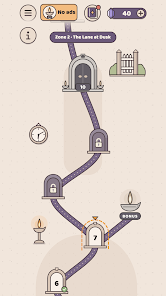
AfterLife: A Puzzle Adventure is a hand-drawn story puzzler from Izanami Arts. Its levels begin with plain-language requests such as “Open the Curtains” or “Find Your Glasses,” then ask you to question the obvious way to carry them out. Tapping and dragging are only part of the vocabulary: the publisher also names tilting, turning the phone face down, and pinching the picture. Between scenes, Gran follows a crow and a name-bearing lamp through memories of her life. It is free with ads, with an optional one-time purchase for ad removal and unlimited hints. The important choice is whether you enjoy surprising interaction puzzles, not whether you can clear timed stages: the publisher says there are no timers or lives.
Read the instruction, then inspect the whole scene
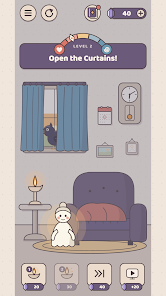
Each puzzle gives an action as its title, but the action is not necessarily performed by tapping the most obvious object. The developer describes each level as a small scene built around one idea. Before trying random touches, identify the exact wording and the objects it could refer to. A curtain may be present, but the intended interaction might depend on what surrounds it. The official description does not publish solutions for individual levels, so the useful method is to treat the title as a clue and test one interpretation at a time.
Because phone orientation and picture scaling are part of the stated controls, a failed tap does not mean the object is irrelevant. Try a drag, a pinch, or a change in device position when the scene invites one. Avoid treating every level as an accelerometer puzzle, though; the publisher says only some challenges ask you to look at the game differently. A wrong answer resets the level immediately, so experiments do not consume a life or a timed attempt. That removes the usual penalty for testing a hypothesis.
Use Heart and Mind without surrendering the solution
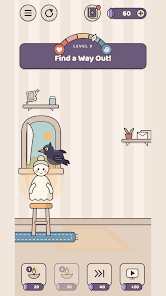
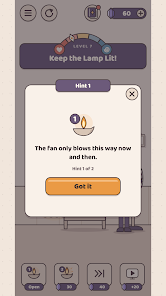
The Heart & Mind meter is described as a subtle signal about whether the current puzzle leans toward logic, observation, or instinct. It is a direction, not a complete answer. If you are stuck, use that cue to decide whether you are overlooking a visible detail or clinging to an overly literal interpretation. Then try the first written hint. Izanami Arts says every level has two hints, with the second stronger than the first. The sequence gives you a way to ask for help gradually rather than opening a full walkthrough at the first difficulty spike.
Skipping a level is also advertised. That matters in a narrative game: one stubborn scene need not halt Gran's entire journey. You can move forward and return to a challenge when you want to solve it. The one-time upgrade includes unlimited hints and removes ads; the free edition still has written hints, but the store description does not spell out every free-use limit. Check the current in-game offer before buying specifically for a particular hint allowance.
Gran's memories make the puzzles more than a checklist
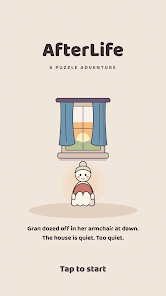
The story begins with Gran in her favorite armchair. Clocks have stopped, nobody in the house sees her, and a crow on the windowsill can speak to her. A lamp bearing her name points toward a distant river. These details establish the emotional premise without revealing the answer to its mystery. The official description also names shadows that steal small things, a companion flame, a torn photograph, an unsent letter, and a second unlit lamp. Treat those objects as story motifs the publisher has disclosed, not as a list of puzzle solutions.
Hidden memory fragments fill a Book that reveals parts of Gran's life. If you care about the story, examine scenes for those fragments instead of racing from one level title to the next. The developer says narrative moments are short and sit between puzzles, so this is not presented as a long visual novel. It is a sequence of compact challenges with a personal thread to connect them. The number of levels, total playtime, and precise ending structure are not stated in the materials we checked.
Accessibility and offline limits worth knowing
Izanami Arts says the game supports play with sound turned off and includes a reduced-motion setting. That is useful if you play during a commute or prefer less visual movement, though it does not guarantee that every other accessibility need is covered. The listing also says there are no energy waits, forced timers, account requirements, or sign-up steps. Progress is saved on the device, and the developer explicitly calls the game fully playable offline. A local save is convenient without an account, but it is not proof of cloud backup or cross-device transfer. Check how to preserve that save before changing phones.
The developer describes the intended audience as around 13 and older and says there is no gore. That is a publisher description, not a guarantee that every child will find the afterlife theme comfortable. Google Play's current age rating and family settings remain the appropriate check for a particular household. The listing also states that no achievement requires spending or watching an ad. Optional rewarded videos exist, but they are not presented as a progression gate.
How it differs from other puzzles on the site
The Operator builds a mystery around desk-based evidence tools and an investigative workflow. AfterLife's distinctive question is more physical: what does the phone, picture, or title let you do that a first tap missed? Both have a narrative thread, but their published interaction systems are different. Choose the investigation if you want to reason through case evidence; choose Gran's journey if you enjoy small visual trick puzzles and mobile gestures.
Royal Kingdom is a match-3 game where moving tiles, clearing obstacles, and building progress are the core loop. AfterLife does not advertise a board, boosters, or an endless level ladder of that kind. Its scenes are individually designed riddles with a story book to uncover. This comparison is about the games' documented formats, not an assertion that one is easier or more original based on a hands-on test.
Common questions before playing
Can I play all the way through without paying?
The publisher calls AfterLife free to play with ads and says rewarded videos are optional rather than required for progress. It offers one optional purchase to remove ads and unlock unlimited hints. That supports a no-purchase route through the story, but the exact free-hint allowance is not clearly itemized in the public description. If hint usage matters to you, inspect the current in-game screen before relying on a fixed quantity.
Does it need an internet connection or account?
Izanami Arts states that the story is fully playable offline and needs no account or sign-up. Optional ads and purchases may still depend on network services, and the listing says progress is saved on your device. Do not assume your save will appear on another phone automatically. If you plan to reinstall, check whether the current app provides an export or transfer method first.
Are the puzzles timed or punished by lives?
No forced timers or lives are listed. A wrong answer resets the level immediately, and the publisher says most levels take a minute or two. That is an estimate in the product description, not a promise that every player will solve every riddle at that speed. You can use two levels of written hints or skip a puzzle if one particular idea blocks the story.
Will I miss story information if I skip levels?
The listing says skipping lets you keep the story moving and that hidden memory fragments fill Gran's Book. It does not explain exactly how skipped scenes affect collectible completion. If the Book is your main reason to play, return to skipped areas and inspect them before assuming that the story has supplied every fragment. The game also has achievements for discovering secrets and solving without hints.
Our take on Gran's journey
AfterLife's strongest distinction is the combination of compact trick puzzles, mobile gestures, and a specific memory-driven narrative. Its hint tiers, skip option, offline claim, and lack of timers lower the risk of one puzzle turning the whole game into a chore. Ads and an unclear free-hint allowance are the practical reasons to inspect the free version before paying for the upgrade. This is an editorial reading of Izanami Arts' official information, not a hands-on report about puzzle difficulty or the quality of the ending.
Official source: AfterLife: A Puzzle Adventure on Google Play. First Android release and store details were checked October 22, 2026.