Crosstalk
- Developer
- Ongakken
- Publisher
- Ongakken
- Release date
- Oct 21, 2026
Screenshots
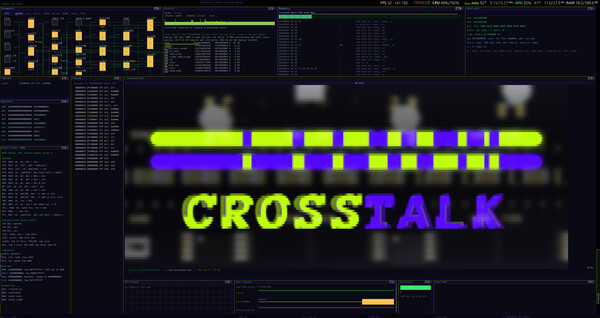
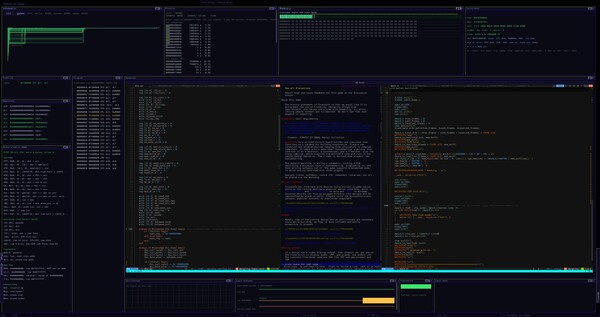
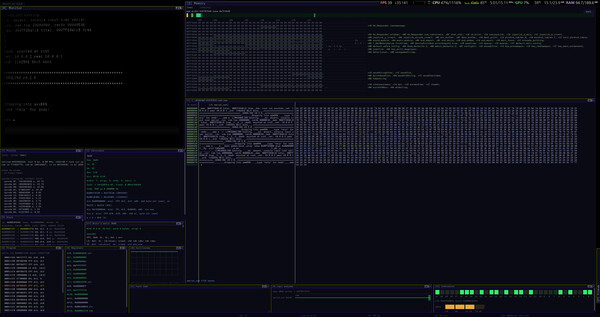
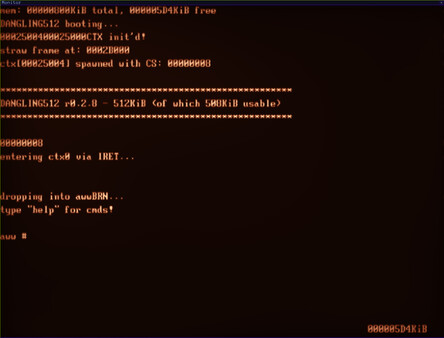
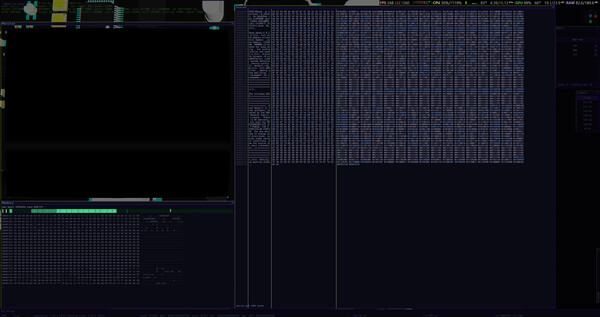
Screenshots supplied with this Steam listing.
Crosstalk is a newly released, free-to-start Steam Early Access sandbox from Ongakken for people who want to design and program computer hardware. Instead of arranging premade machines, you describe logic in SystemVerilog, simulate it, inspect its behavior, and write software for a processor you build or adapt. The store lists a single-player workspace, networked collaboration, and Steam Workshop sharing. This is a technical creation tool presented as a game, not a beginner-friendly circuit puzzle with a fixed sequence of levels. Its October 21, 2026 launch announcement says the current Windows build needs an internet connection and remains under the game's EULA while the developer prepares a separate source release.
What you build in the current sandbox
The core loop begins in the RTL workspace. The developer describes opening a shell, writing a design in SystemVerilog, programming it, and then creating software that runs against the resulting architecture. Examples range from an LED controller or calculator to a more complex computer. The store lists a parser, elaborator, synthesizer, C emitter, gate-level simulator, emulator, and bundled compiler. Those are distinct steps: describing behavior is not the same as checking timing or running a program on the resulting design. Someone who enjoys seeing how a machine works below the application layer is the intended audience.
Inspection tools matter because a design can compile and still do the wrong thing. Crosstalk advertises a memory view, runtime activity indicators, an oscilloscope, a profiler, and schematic views at RTL and gate level. The accelerated path emits C99 from your own SystemVerilog and runs it through an included Clang toolchain; the store warns that a separate behavioral emulation mode gives up design-accuracy guarantees. Gate-level simulation is more detailed but expensive and capped to smaller designs. When a result looks implausibly fast or a signal behaves differently, first ask which simulation mode produced it before treating the run as a verified hardware result.
Use the reference architecture before inventing one
The package includes the developer's DANGCSA/DANGXA instruction-set architecture and DLU processor as a reference implementation and compilation target. The store says the DLU supports serial communication, text and video output, audio, and MIDI. Starting with that supplied target can separate two problems that are hard to debug at once: whether your hardware design is working and whether a brand-new instruction set is coherent. Once a small program runs on the reference architecture, you have a comparison point for experiments with your own core.
The game also includes a terminal emulator and virtual serial ports. Its description says a physical serial interface can connect a design to an external microcontroller, sensor, button, instrument, or another computer. That possibility is exciting but should be treated as an advanced workflow. Check port permissions, device compatibility, and any risk to hardware before connecting real equipment. A virtual port and built-in display mode are safer places to learn the tool. For visual output, the current store page lists CRT, gas-plasma, and LCD styles using CGA or VGA interfaces; these are display emulations, not claims that your PC itself becomes an old monitor.
Solo work, collaboration, and the Workshop
Self-play is described as the default sandbox: you arrange floating windows, run a shell or editor, and build at your own pace. A networked submode lets players work together through Steam Networking. The store also says complete designs, processor cores, and software can be shared through Steam Workshop. Those features make Crosstalk more open-ended than a level-based logic game, but they do not guarantee that an unfamiliar design can be understood without documentation. When sharing, explain the intended inputs, outputs, build steps, and simulation mode so another player can reproduce what you saw.
The publisher calls out Steam Chat, leaderboards, statistics, and achievements as social integrations. They are secondary to the hardware workspace. If your main interest is a visually driven management sandbox, Planet Zoo 2 is a clearer contrast: it asks you to design habitats and manage a zoo, while Crosstalk asks you to specify and inspect machine behavior. Both can absorb hours in an open workspace, but only one expects comfort with hardware-description languages and low-level software. The Steam simulation category contains both styles.
Early Access is a current-state warning
Steam marks Crosstalk as Early Access, with the Early Access start shown as October 21, 2026. Ongakken says the present build focuses on RTL design and emulation of its own architecture. The same developer page describes future reverse-engineering features, PCB editing, component imports, and a city-builder mode; those are plans, not features to expect in today's installation. Its stated target for leaving Early Access is 2029, but a target is not a release guarantee. Buy or install for the current toolset, not for an unshipped roadmap.
The launch announcement is also important when reading the store page's licensing text. The announcement says the October 21 build was released as an AMD64 Windows binary under the game's current EULA, with source code and an AGPLv3-only switch planned later. Older Early Access copy on the page still describes source and paid binary plans, so the published statements are not perfectly synchronized. The active Steam offer currently labels the base game Free; some DLC is listed, but the launch note says DLC items were not yet available at release except an initial soundtrack. Check the current store and developer news before assuming a particular license, binary entitlement, or expansion is already delivered.
Price, platform, and system requirements
The Steam purchase block shows “Play Crosstalk” at Free as checked on October 22. The developer's launch message says the current binary is Windows-only and needs network access for startup entitlement checks involving Valve and Discord; it also describes a built-in report function that contacts its server. This is not an offline-first game today. The minimum PC specification on the store is 64-bit Windows 10 version 1809, a 2.4 GHz quad-core processor, 8 GB RAM, broadband internet, and 6 GB available storage. The recommendation rises to Windows 11, a 4.6 GHz octa-core processor, 16 GB RAM, and 12 GB storage. These are publisher requirements, not a measured performance benchmark.
SystemVerilog, a shell workflow, and physical serial interfaces create a steep learning curve even if the download costs nothing. Start with a small LED or terminal-output design before attempting a CPU, compiler target, or real-device connection. Keep a copy of your work and use Workshop sharing deliberately: a public upload may expose code or design details you did not intend to publish. The store says Steam Cloud is supported, but check actual save behavior before relying on it as your only backup.
Questions prospective players should ask
Is Crosstalk a finished engineering tool?
No. Steam labels it Early Access, and the developer describes a present focus on RTL design and its custom architecture. PCB editing, reverse-engineering tools, and the city-builder mode are described as future work. It may change substantially before a full release. If you need a production-validated hardware toolchain rather than a learning sandbox, assess the current build and its limitations carefully.
Do I need to know SystemVerilog already?
The advertised default workflow involves writing SystemVerilog, using a shell, compiling software, and interpreting simulator output. That does not mean prior expertise is an installation requirement, but it does mean the public materials do not promise a gentle drag-and-drop tutorial. Begin with the included reference architecture and a small example. Someone new to digital logic should expect to learn underlying concepts alongside the interface.
Is the base game free, and is the source available now?
Steam's live purchase block labels the base game Free. The October 21 developer announcement says the released binary remains under the current EULA and that the source and AGPLv3-only licensing will follow later. Some older text on the same page describes a different package plan. Do not assume every planned DLC or source package is available merely because it is listed or discussed; check the latest announcement before making a licensing decision.
Can I work with a friend or external hardware?
The store describes a networked collaboration mode through Steam Networking and serial I/O to virtual or physical devices. Those are separate workflows. Multiplayer depends on networking and the current build; a physical sensor or board also requires compatible ports and careful setup. Start with virtual devices and save a reproducible project before connecting external equipment.
Our take on this unusual Steam release
Crosstalk is most interesting as a place to experiment with the boundary between logic, computer architecture, and software. Its inspectable simulator and reference ISA give technically curious players concrete things to investigate. The tradeoff is that Early Access status, a rapidly changing roadmap, and contradictory older licensing copy require more caution than a typical free game. This assessment is based on Ongakken's store page and launch announcement, not a hands-on evaluation of simulator correctness or hardware compatibility.
Official sources: Crosstalk on Steam and the developer's October 21 launch announcement. Details were checked October 22, 2026.
System requirements
WindowsMinimum
- Requires a 64-bit processor and operating system
- OS: Windows 10 1809
- Processor: 2.4GHz quad-core
- Memory: 8 GB RAM
- Network: Broadband Internet connection
- Storage: 6 GB available space
- Additional Notes: simulated clock linearly follows single-core frequency multiplied by IPC
Recommended
- Requires a 64-bit processor and operating system
- OS: Windows 11
- Processor: 4.6GHz octa-core
- Memory: 16 GB RAM
- Network: Broadband Internet connection
- Storage: 12 GB available space
- Additional Notes: simulated clock linearly follows single-core frequency multiplied by IPC
Check the current Steam listing for the latest platform-specific requirements.
Game information
- Title
- Crosstalk
- Category
- Simulation
- Developer
- Ongakken
- Publisher
- Ongakken
- Release date
- Oct 21, 2026
- Platforms
- Windows
- Steam App ID
- 4898790
- Official store
- Steam