Hades II
- Developer
- Supergiant Games
- Publisher
- Supergiant Games
- Release date
- Sep 25, 2025
Screenshots
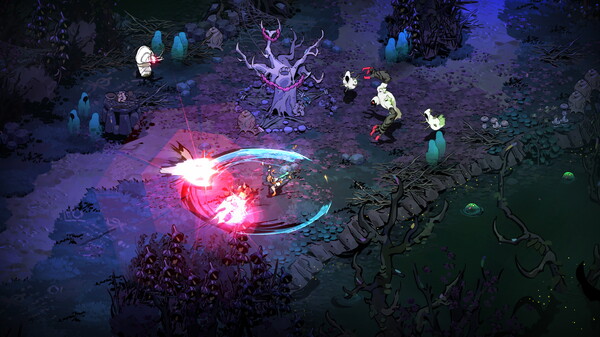
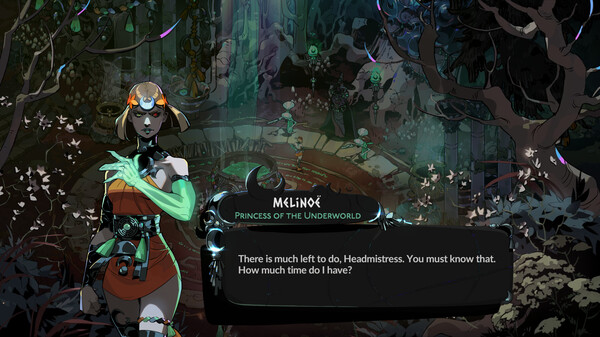
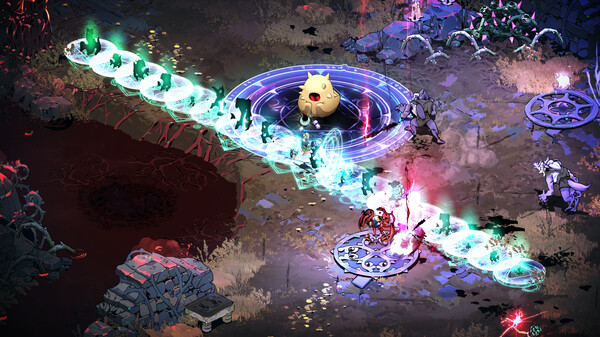
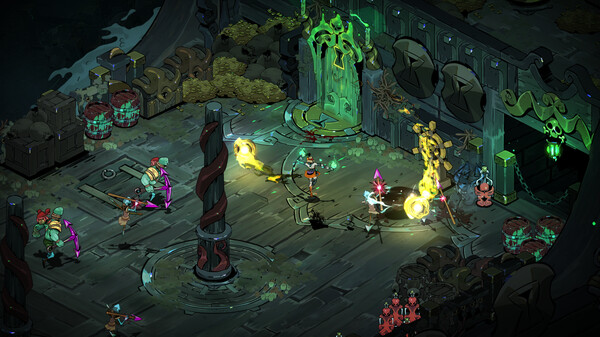
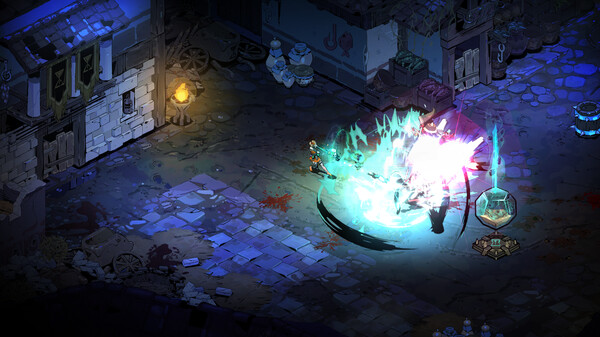
Screenshots supplied with this Steam listing.
Hades II is Supergiant Games' action roguelike sequel starring Melinoë, the Princess of the Underworld. The official Steam description sends her against the Titan of Time, with weapons of Night, witchcraft, Olympian Boons, and characters whose stories develop across repeated runs. It is a paid, released PC game. Its appeal is that failure changes what you can learn and unlock rather than simply resetting a level. It will not fit someone who wants to clear each area once and move on without repeating encounters.
Why repeated runs are the point
Steam describes an ever-shifting Underworld, new locations, and evolving challenges. Each run lets you try a combination of tools while revealing another piece of the story. A loss may still teach you an enemy pattern or show whether your current weapon and Boons work together. Start by choosing one question for a run: can you survive longer by controlling distance, or does a particular upgrade improve a move you already use? This makes repetition purposeful rather than a demand to reproduce the exact same attempt.
Do not measure progress only by a final victory. The official page says new interactions with voiced characters and story events emerge as the journey unfolds. Speak with familiar faces between attempts and inspect new options at the base. A player who skips all those conversations may miss a substantial part of what differentiates Hades II from a pure score-chasing action game.
Weapons, witchcraft, and Boons
Supergiant describes the weapons of Night and magical abilities as a foundation for combat, with Boons available from more than a dozen Olympian gods. The strategic choice is not to collect every attractive effect independently; look for interactions with the attack or control style you can actually execute. If a weapon favors a particular range, a Boon that supports that rhythm may be more helpful than one with a large number but little synergy. Try a new option for a few encounters before declaring it weak.
Every build also has a defensive side. Learn an enemy's warning before spending a resource on offense, and leave yourself room to move when an arena becomes crowded. A strong effect cannot compensate for ignoring a repeated hazard. The official page promises many possible builds, not a permanent single best configuration; updates and personal skill can change which combination is effective for you.
Relationships and the unfolding myth
Hades II draws from Greek myth while telling its own story of the Underworld and witchcraft. The store page mentions gods, ghosts, monsters, and both new and returning faces. A newcomer can follow Melinoë's immediate goal without memorizing every mythological reference, but listening to character conversations helps connect a run's combat choices to the larger narrative. Because events are tied to continued attempts, a quick summary can spoil discoveries that are meant to arrive gradually.
Players coming from ELDEN RING should expect a different form of challenge. Both games reward learning an enemy, but Hades II is organized around repeated runs and changing builds rather than roaming one continuous open world. The comparison is about structure, not a claim that one has objectively harder combat.
A first-session plan
Learn the basic attack, special, and defensive movement of the starting weapon before chasing elaborate combinations. Pay attention to which enemy telegraphs repeatedly catch you. Between runs, inspect the available upgrades and speak to characters with new dialogue. In the next attempt, test one change that addresses the problem you identified. If a Boon appears that you do not understand, read what action it modifies before taking it only because its rarity looks attractive.
Some players like to optimize a run immediately. Others get more enjoyment from discovering interactions organically. The official description supports both experimentation and long-term progression, but neither requires you to consult an external tier list before the first few hours. Keep the game's story and mechanical discovery intact if those are why you bought it.
Release, platform, and purchase details
The Steam source captured for this page identifies Hades II as released and lists single-player and full controller support. Confirm current price, editions, supported languages, and PC requirements on the official store before buying. A Steam release date does not tell you how an individual computer will perform, and this article does not report tested frame rates. If accessibility or control remapping is decisive, review the current store and in-game options for the exact feature you need.
There is no reason to describe a published sequel as an unreleased preview. Equally, it would be misleading to pretend our editorial assessment comes from a new hands-on session. The grounded conclusion is that Hades II targets players who enjoy fast action, iterative builds, repeated attempts, and a story that grows between attempts. It may be the wrong purchase for a player who dislikes revisiting areas after failure.
Official source: Hades II on Steam.
System requirements
WindowsMinimum
- Requires a 64-bit processor and operating system
- OS: Windows 10 64-bit
- Processor: Dual Core 2.4 GHz
- Memory: 8 GB RAM
- Graphics: GeForce GTX 950, Radeon R7 360, or Intel HD Graphics 630
- Storage: 11 GB available space
Recommended
- Requires a 64-bit processor and operating system
- OS: Windows 10 64-bit
- Processor: Quad Core 2.4ghz
- Memory: 16 GB RAM
- Graphics: GeForce RTX 2060, Radeon RX 5600 XT, or Intel Arc A580
- Storage: 11 GB available space
Check the current Steam listing for the latest platform-specific requirements.